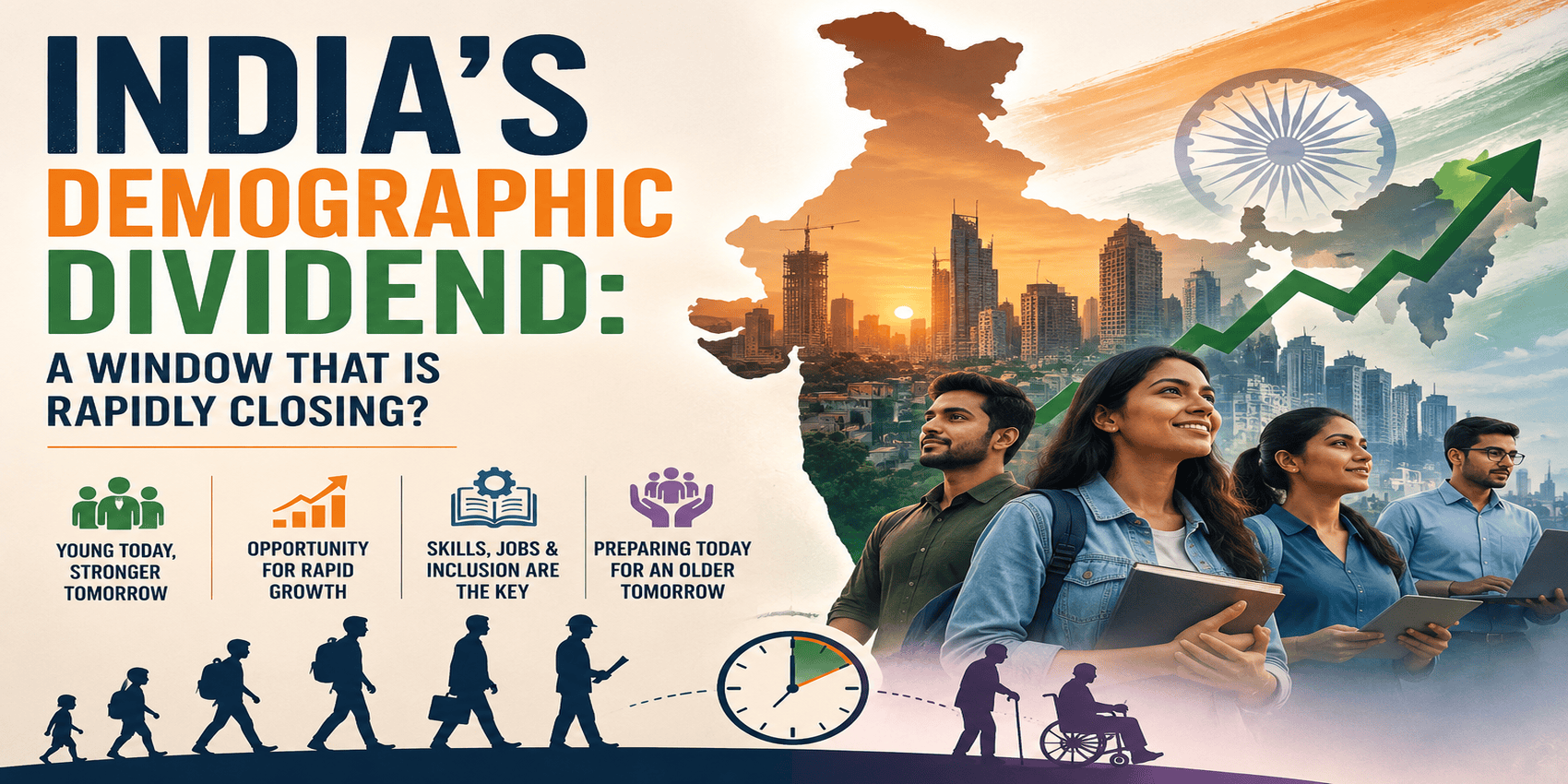
India's Moment of OpportunityIndia is today undeniably one of the most attractive countries in terms of demographics. To begin with, this is because about 68% of Indians are of working age (15–64 years). In addition, the median age in India is only 29 compared to 39 years in the United States, 45 years in Germany, and 49 years in Japan. UNFPA notes that India's demographic window opened in 2018 and will remain open until 2055. This is a fantastic opportunity for India to accelerate its economic growth. Even so, even a young population is not a guarantee for prosperity if there are not enough jobs, proper education, and access to skills development. India has a unique opportunity to benefit from its demographic dividend, but it must address a series of challenges and dilemmas. Global Examples of a Successful Demographic DividendHistory shows that a favourable fertility structure can translate into rapid economic growth when it is combined with the right conditions. The United States experienced a strong baby boom between 1946 and 1964. People born during this baby boom entered the workforce gradually from the early 1960s. Their economic output is estimated to increase GDP by 0.4 percentage points annually.Japan had a much shorter baby boom, only lasting between 1947 and 1949. However, that was enough to propel Japan's GDP growth into double digits over the ensuing two decades, starting in the sixties. At one time, Japan was projected to overtake the USA as the world's largest economy.China had a different type of dividend boom due to the enactment of the one-child policy in 1979. This led to a high worker-to-dependent ratio due to a large working-age population, because of sky-high fertility rates in previous decades, and fewer dependents as a result of fewer children being born after the one-child policy.These experiences illustrate the importance of India utilising its demographic dividend if it wants to change its economic destiny. India's Progress and Policy Response So FarA younger workforce is already driving India's economic momentum. It has strengthened growth across manufacturing, construction, IT-BPM services, e-commerce and fintech, helping the country remain among the world's fastest-growing major economies.To translate this demographic advantage into long-term development, the government has placed it at the centre of its Viksit Bharat 2047 vision. Several flagship programmes have been introduced to support that objective. The Skill India Mission and Pradhan Mantri Kaushal Vikas Yojana (PMKVY) provide vocational training to millions of young people. The National Apprenticeship Promotion Scheme supports industry partnerships, and the PM-SETU initiative is modernising a thousand Industrial Training Institutes across the country. The National Education Policy (NEP) 2020 supports this effort by mainstreaming skill-based education. The government has also introduced Mission Shakti and dedicated National Skill Training Institutes for Women, recognising that the dividend cannot be realised without wider participation from women. Key Challenges Facing India's Demographic DividendIndia faces a major concern because fertility has fallen below replacement levels before the country has achieved the income levels seen in advanced G20 economies.According to NFHS-5 and SRS data, India's total fertility rate is between 1.9 and 2.0, already below the replacement level of 2.1. The decline in fertility is a natural part of economic development. Yet, a problem arises when fertility falls below the replacement level before average income reaches a sufficient level. In most of the developed world, per capita GDP rose to $30,000 before fertility began to decline below the replacement level, whereas India's GDP per capita is only around $ 3,000. There is a real risk that India will grow old before it becomes rich.There is also an issue of female participation in the total workforce of India. On paper, female labour participation rose from 23 per cent in 2017 to 41 per cent in 2023. But this is still low compared to other developing countries on a similar economic path to India, such as China and Vietnam, where the number hovers around 60 per cent. Also, most women in the workforce are self-employed or have low-paying jobs compared to their male counterparts. This leads to underutilisation of female potential in the Indian economy, and leads to a lower contribution to the economy. The McKinsey Global Report has pointed out that India is missing 700 billion dollars in GDP every year due to female under participation in the economy.India also needs to create high-productivity jobs at a much higher rate. Many highly educated students or workers are forced to immigrate to Western countries so they can get the economic reward that matches their technical skills. This leads to brain drain and loss of the most productive people from the workforce. Also, around 46 per cent of Indians are employed in the primary sector, which accounts for only 16 per cent of GDP, according to NITI Aayog. We need to make sure that more workforce participants participate in the Manufacturing and Service sectors, as they have higher productivity and economic impact as compared to the primary sector. Looking Ahead: Preparing for an Older IndiaIndia's demographic dividend would not last for a very long time. Today, people over the age of 60 account for 11 per cent of the population of India, according to UNFPA. However, this number is projected to increase to 20 per cent by 2050. This would lead to increasing demand for healthcare and long-term care infrastructure. If this is not addressed well before the 2050s, it could strain public finances in the same way it already strains developed countries with a similar ratio.France shows how quickly this can turn into a crisis, even for a wealthy country. Its pay-as-you-go pension system has seen the number of contributors per pensioner fall from about four in the 1960s to fewer than two today. The 2023 attempt to raise the retirement age from 62 to 64 triggered months of strikes, and the pension system is still projected to remain in deficit for years. If France, with decades of institutional capacity and a much higher per capita income, continues to struggle with the fiscal consequences of an ageing population, India's task at a much lower income level is likely to be harder still. ConclusionIndia's demographic dividend is real, but it is not guaranteed. Its long-term outcome will depend on decisions taken today. Expanding skills, creating productive employment, encouraging greater participation of women in quality jobs, and strengthening healthcare and pension systems are all essential before population ageing gathers pace. The window is open only until around 2055. Genuine action, not simply being young, will decide what India makes of it.
Read More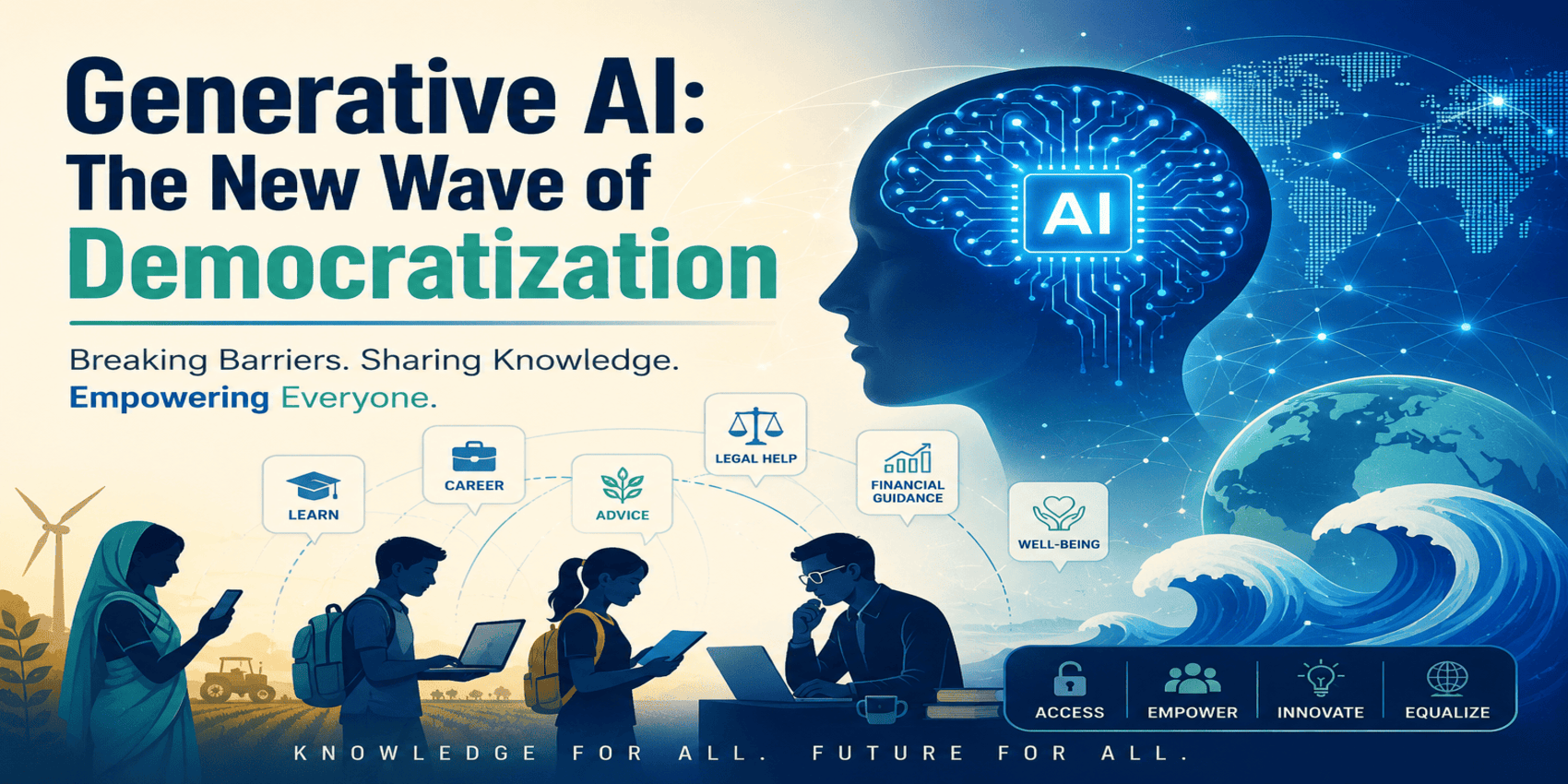
Which career suits me best? Which skills should I work on? Earlier these questions were directed towards our seniors in college, maybe our father’s friend or that neighbour who was in good corporate position. However, today this information is just one click or rather one prompt away. Welcome to the Artificial Intelligence (AI) world that has decentralized the information that was once only accessible to people with proximity to certain socio-economic groups.This article explores how generative AI is changing access to knowledge, why so many people rely on it, the challenges that arise with this growing dependence, and the policy measures needed to ensure its benefits are shared responsibly. How AI Replaced the GatekeepersBefore this new wave, the internet was already at the forefront of democratizing information. We all became accustomed to search engines, YouTube, learning platforms and others. What generative AI platforms like ChatGPT, Gemini, Claude etc. brings unique is the power of contextualization. It can analyze the context and give tailor made responses which are quick and concise.In economics, it is taught that information asymmetry creates market inefficiencies. It distorts market as was shown by Nobel Laureate George Akerlof's 1970 paper on the "Market for Lemons". The same logic extends to social mobility. A career counsellor, a chartered accountant or a legal advisor for most people remained out of reach, not for lack of need, but for lack of money, access, and the right circles.If one sees the whole success of premier institutes like IIT/ IIM, it stems from the fact that they knew how to land that internship, how to build career in finance, how to crack that top company interview round. Of course, quality of education mattered. Although, the holy prep material and informal guidance helped them get a headstart.Then came the era of online lectures and classes which made coaching accessible to masses. Now we have the AI tutors. Solving doubts, explaining each step multiple times, creating personalized plan and interactive quizzes. And it is not just limited to education. Doing assignments, brainstorming problems, drafting messages and many more, AI has become our daily assistant. Farmers seeking advice, people starting businesses, creating diet and exercise plans, budgeting and many more, AI has become our teacher, financial advisor, therapist and what not.AI has made things unimaginable possible. Three 22 year old founders (Brendan Foody, Adarsh Hiremath, and Surya Midha) dropped out of college to build Mercor, a revolutionary AI-driven recruitment platform. They raised millions, achieving a $10 billion valuation and becoming the world’s youngest self-made billionaires. The shift is there to stay. The Trust Deficit and AI as an EqualizerIndia is at the forefront of this shift. A 2024 Deloitte survey across 13 Asia Pacific economies found that 93% of Indian students and 83% of Indian employees actively use generative AI, ranking India first in the region.One may wonder why it was adopted at such an unprecedented rate. The reason being trust. We are taught that humans are social animals. However still in society, trust is the biggest issue. Information asymmetry meant people cannot trust other people. And resources were always a constraint. For the majority, a second opinion of say career counsellor, lawyer, chartered accountant or a mechanic comes at a cost and time. This erosion of trust in traditional methods is precisely where AI has stepped in. AI has now empowered the people to understand complex things in simple language. Information gap thus has been reduced.Apart from information gap, skills gap too is getting decreased. Years of work experience have started losing relevance. It is more about adapting skills. Now AI can even do complex data analysis, coding and modelling. AI has become a kind of equalizer. Everyone must adopt it or face the fear of being left behind, thus forcing workforce-wide reskilling with AI at the center regardless of their work experience in industry. Challenges RemainAs the saying goes, technology is neutral, it's how you use it that matters. And the same ecosystem enabling this democratisation carries serious risks to society. Researchers are now worried about people using AI to build toxic chemicals, bombs, hack computer systems or even for crimes like theft, murder and smuggling.The veracity of AI generated content is always an issue, exacerbated by the opaque algorithms that run behind them. AI systems still get things wrong, sometimes confidently so. In high stakes domains like healthcare, taxation, or legal advice, a plausible sounding but incorrect answer can cause irreversible harm. Fake AI generated data has become another headache for countries worldwide leading to disinformation. Blindly following AI is not advisable, and yet that is what many users tend to do.Poor internet connectivity and digital literacy still make it difficult for rural areas to catch up. Then there are language barriers too. A Microsoft report states that AI adoption in the Global North is growing nearly twice as fast as in the Global South. The risk is not just that AI bridges the gap, it may worsen it.Too much reliance on anything is not good. Scientists have warned of declining cognitive skills. Students are not learning instead using AI impacting their brain growth negatively. And privacy concerns, ethical issues, hallucination are still challenges that we are yet to overcome. Big tech players are constantly trying to fix the loose ends, but they have long to catch up.Policy Implications and the Path ForwardFor this democratization to be effective and sustainable, some policy shifts are needed. AI Infrastructure is an important pillar. Data centres, GPUs, reliable internet connectivity and others are must to access AI. The India AI Mission, approved in 2024 with the budget of around ₹10,000 crore over five years, is a step in the right direction.Alongside infrastructure, AI literacy needs to be woven into school curricula and vocational training the way financial literacy programs are pushed. A citizen who understands how AI works, including its limitations, uses it prudently.Finally, regulatory guardrails, especially for AI in healthcare, legal, and financial advisory, must be there to assign clear accountability for AI generated information, without slowing down the innovation.Democratization of information has always been one of the promising benefits of internet economy. Power has been quietly flowing from the top downward and AI is the latest, and perhaps the most significant chapter in that story. AI, if deployed thoughtfully with inclusivity and equity can serve all of us. We must remember that technology should never become the master of the human beings it was built to serve. The technology offers the promise. Policy and intent determine whether this democratization will sustain in a healthy manner.
Read More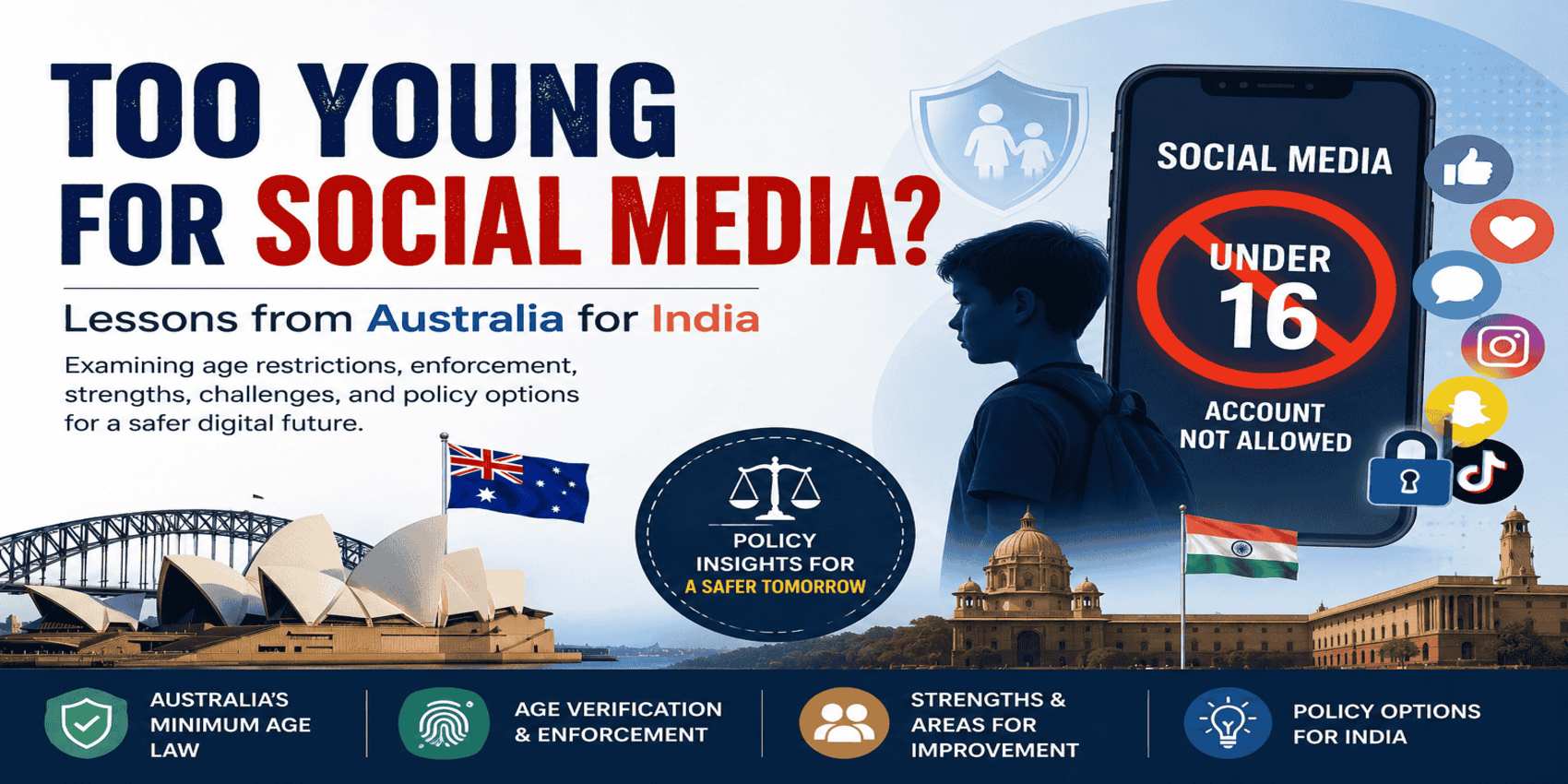
While presenting the state budget for the financial year 2026–27, the then Chief Minister of Karnataka announced that children under 16 would be banned from using social media. The proposal aims to address concerns about increased mobile phone use among children, including its potential impact on academic performance and physical fitness. Detailed policy measures, including the implementation framework, are yet to be announced.This proposal may therefore operate alongside section 9 of the Digital Personal Data Protection (DPDP) Act, 2023 and rule 10 of DPDP Rules, 2025, both of which list provisions to obtain verifiable consent of a parent or legal guardian before processing a child’s personal data. This initiative of the Karnataka Government aligns with the central government’s plans for a similar policy, as mentioned by India’s Union IT Minister during the India AI Impact Summit 2026. The governments of Andhra Pradesh and Goa, as well as those of Germany, France, and Malaysia, are also working on similar bills.As Karnataka becomes the first Indian state to impose such a ban, there will be significant implications for all stakeholders, including children themselves, parents/guardians, schools, social media companies, and law enforcement agencies. It is wise to analyse similar legislation in other countries to understand the enforcement mechanism and effectiveness. This article reviews the recently implemented Social Media Minimum Age Act of Australia and extends it to the Indian context. Case Study: Online Safety Amendment (Social Media Minimum Age) Act 2024 - AustraliaAustralia introduced a minimum age of 16 for accounts on certain social media platforms, requiring platforms to take reasonable steps to prevent under-16s from opening accounts. Enforcement MechanismAs per the Age Assurance Technology Trial Report, age verification could happen through:Facial age estimationDigital ID verificationVerification by parentsIt can be implemented through specialized third-party service providers. While different systems may be suited to different platforms, the report notes the need for standardised systems that work across multiple platforms and services. Moreover, a combination of methods may be used to reduce circumvention.Courts can order penalties of up to 49.5 million AUD if firms do not take reasonable steps to prevent underage users, thereby strengthening enforcement through negative reinforcement.In India, age verification could possibly be implemented using Aadhaar-based authentication systems. StrengthsThe policy helps eliminate social validation mechanisms such as the number of likes, followers, etc., that create unnecessary stress. In other words, the ‘network effect’ is disrupted due to the absence of individual accounts, thereby reducing peer pressure and promoting psychological safety.It prevents active participation, including posting, liking, and commenting, which are major drivers of addictive behaviour. Areas for ImprovementSince the restriction primarily focuses on account creation, minors can still view social media content in a logged-out state.The rules do not directly regulate algorithmic recommendation systems that drive engagement and cause addiction. While restricting account creation may weaken algorithmic feedback loops, behavioural profiling, and reduce personalization, recommendations can still be provided based on device usage patterns, cookies, browser session IDs, and trending content. As a result, some drivers of excessive engagement may remain.Platforms may reposition their services as gaming, messaging, or educational platforms to avoid being classified as social media platforms. For example, Rapido temporarily reframed its ‘bike taxi’ service as ‘bike parcel’ service when the Karnataka High Court upheld the ban on bike taxi services imposed by the Karnataka Government in June 2025.Children may access shared family accounts or their parents’ accounts. This poses an even bigger risk in India, where smartphones are shared between children and parents in many households.While the Australian policy offers opportunities for further refinement, it has been designed as a risk-mitigation or social media harm-mitigation measure, and not as a complete solution. The explanatory statement provided by the Australian Government itself notes that the framework ‘is not the be-all or end-all solution’ and is meant to complement other online safety regulations. Policy Considerations for Governments in IndiaIn response to the Karnataka Government's ban, Meta warned that such regulations might push children towards unsafe, unregulated websites. This, coupled with the improvement areas already highlighted in the Australian context, calls for more innovative and balanced policy measures as an alternative to blanket bans. Some of the measures that governments in India could consider are as follows:Incentivize social media firms to introduce a child-safe version of their existing apps, such as ‘YouTube Kids’.Design and enforce child-specific design standards such as the UK’s Age Appropriate Design Code. The code could include provisions such as strict content moderation, stronger parental controls, the removal of recommendation algorithms, and restrictions on active engagement features such as comments and likes. These measures would align with the recommendations of Brookings, a well-known public policy think tank.Regulators can provide ‘Child Safe Platform Certification’, which would not only be used for approvals, but could also enhance the reputation of social media apps and firms.As suggested by Meta, laws that empower parents to approve teen app downloads on the app store can be explored.In addition to legal regulations, governments should also invest in creating awareness and improving digital literacy to help children understand the negative effects of social media. Such approaches aim to augment policies borrowed from other countries while preserving their unique strengths. ConclusionTime will only tell whether such policies help achieve their desired objectives. Until then, it is necessary to continuously track outcomes, and, yet again, the Australian government has developed a research-based evaluation framework for this.
Read More
Trades build partnerships, partnerships mould alliances, and in this era of technology, policies shape the future. To first describe Strategic Diversification, we must first understand that it is a flexible policy that countries use as a beacon to navigate this BANI world (an aggregate result of Brittle systems, Anxious people, Nonlinear outcomes, and Incomprehensible complexity). Key features of this policy include diversifying trade routes, developing new energy sources, mining critical minerals, and even redefining the existing supply chain. Defining this broad policy leads us to ask the obvious question: whether adopting strategic diversification guarantees cementing India's position in this dynamic world order?And the answer is not so straightforward.Earlier this year, India negotiated one of the most strategic economic partnerships with the EU, christened as "Mother of All Deals". That deal combined the world’s 4th and 2nd largest economies, totalling a GDP of over USD 24 trillion. History was made that day, as it enabled over 90% of India’s exports to have immediate duty elimination. This landmark FTA laid the groundwork for umpteen opportunities across sectors ranging from textiles and pharmaceuticals to chemicals and engineering equipment. It aimed to leverage a combined 25% of the world's population, and this agreement proposed creating global demand for local manufacturers in India.Through this historic India-EU deal, we get a sense that today's India is writing its own growth story. As per the Commerce Ministry's report, Indian exports expanded to over USD 634 billion for the April-December 2025 period. And in January 2026, the World Bank Group pegged India's growth at 7.2% for fiscal year 2025-26, with the service sector driving the story. These facts bolster India’s goal to amalgamate its young workforce with global opportunities. But what threatens this story is the heightened global uncertainty. For the Viksit Bharat 2047 vision to enjoy tailwinds, India must aim to fortify its growth trajectory by creating a unique array of trade deals worldwide through strategic diversification, safeguarding its national interests by meeting domestic requirements, and nurturing its industrial ecosystem to meet global demands. While India scales ahead with its newfound policy, the undercurrent is that policies that once dictated governance on an international scale are now changing at lightning speed. Each country aims to reap maximum benefit by strengthening its stronghold resource. Last year, in 2025, the USA imposed a 25% reciprocal tariff on all Indian goods to limit the widening trade gap, which was increased to 50% to penalise India's import of Russian Urals. In February 2026, the USA announced it would reduce the earlier-imposed tariffs to 18% and, as a reciprocal trade effort, wants India to consider importing Venezuelan oil. This significant rollback of tariffs was aimed at giving Indian industries a competitive advantage over those in ASEAN countries, which face tariffs of 19% or higher. Union Commerce and Industry Minister Piyush Goyal stated regarding the ongoing trade negotiations that “Today, India negotiates from a position of strength. We are a $4 trillion economy today, but it is going to be $30-35 trillion by 2047 when we are a developed economy.”Thus, in a world where developments around policies are changing rapidly, it is prudent for India to trade with an arm's-length transaction doctrine and continue this path of strategic diversification with all its global partners. This policy is not risk-free; adopting strategic diversification adds a layer of scepticism as it slowly erodes the stability which the global partners once yearned for. But when one takes a step back to look at the bigger picture, we observe that evolution requires continuous improvement, and this policy might be our best path forward. Ultimately, the policy of strategic diversification is not limited to international trade. Today, it is being used to assess India's current position at a crossroads amid sweeping reforms in the energy and technology sectors. Last year itself, the Ministry of Coal reported that India has the 5th largest coal reserves globally and is the 2nd largest consumer, with 70% of its energy mix powered by coal. In COP26, India presented its five nectar elements (Panchamrit) of India’s Climate Change, one of which is to achieve net-zero by 2070. Therefore, India's energy imperative lies in developing policies that promote the adoption of renewable power and help India achieve energy independence through diversification. To support this narrative, in the 2026 budget too, the government focused on achieving critical mineral sovereignty by establishing a dedicated rare-earth corridor across Odisha, Andhra Pradesh, Tamil Nadu, and Kerala. External trade-partners like the US invited India to join the Pax Silica Initiative (a US-led strategic initiative to secure the supply chain of critical minerals) to build logistics capabilities, advance manufacturing, and develop new frontier technologies such as AI and semiconductors. To push forward India's Green initiative efforts, an allocation of INR 20,000 Cr in the 2026 Union Budget was made for the development and deployment of Carbon Capture, Utilisation and Storage technologies (CCUS) over the next five years.In a nutshell, strategic diversification policy-making in the context of managing internal resources is about putting India first by analysing its current energy portfolio and assessing the challenges of adopting newer technologies.Till now, we have gained an overall view of policy formulation; what remains is the implementation of strategic diversification. Implementation of any policy is heavily dependent on a resilient internal system that can adapt to rapid changes. If we take a closer look at the unit economics of the Indian modal mix (as illustrated in the KPMG article - Logistics costs to GDP: Can Budget 2026 finally move the needle?), trucks carry 60–65%, rail carries 27–28%, and waterways under 2% of the total freight, and on an average, cost of hauling 1 tonne of cargo is ₹2.5–₹3.0 for road, versus ₹1.5–₹1.8 for rail and ₹1.0–₹1.2 for waterways, resulting in uneconomic utilisation of transportation modes. To mitigate this underlying problem, the 2026 union budget specially allocated INR 12.2 lakh crore in CapEx to boost the Indian logistics network. It focused on developing 20 new National Waterways, 7 high-speed rail corridors (growth connectors) and Dedicated Freight Corridors (DFCs) to unlock rapid industrial growth while lowering logistics costs and carbon intensity.In conclusion, we can infer from the recent policy changes that the requirement for this policy stems from India's ability to drive the new world order. Creating opportunities through effective policy-making and efficiently utilising them is the crux of strategic diversification. And in an era defined by rapid information flows, this policy is the key to synthesising complex global relations and creating a path forward.
Read More.png)
Union Budget 2026 is more than an exercise in accounting. It is a statement of intent - political, ethical, and social - about what the nation chooses to prioritise at this moment in its journey. Budgets are often read for their numbers, but they deserve to be read for their values. They reveal how a state understands its responsibilities: to its citizens, to the environment that sustains its economy, and to the wider world it is embedded in. In an era where nations are increasingly assessed not only by economic size or strategic power but by the credibility of their commitment to welfare, sustainability, and global stability, fiscal choices become moral choices. They indicate whose lives are being improved, which futures are being prepared for, and how responsibly national power is being exercised.It is in this normative context that the recently launched Responsible Nations Index (RNI) offers a useful lens. By evaluating countries across internal, environmental, and external responsibility, the RNI shifts attention away from growth alone and towards ethical stewardship. Viewed through this framework, Union Budget 2026 invites examination not merely for what it funds, but for the kind of nation it seeks to shape.On internal responsibility—the first and strongest pillar of RNI—the budget sends a clear and confident signal. Its emphasis on citizens’ well-being, equity, and empowerment is reflected in sustained public investment aimed at long-term growth and employment creation. The proposed capital expenditure of Rs 12.2 lakh crore reinforces a multi-year strategy that treats public spending as a catalyst for economic momentum, private investment, and job creation, elements that align closely with RNI’s economic performance indicators.A particularly notable feature is the renewed focus on micro, small, and medium enterprises. The proposed Rs 10,000 crore SME Growth Fund, aimed at nurturing “future champions," recognises MSMEs not merely as economic units but as social anchors that generate livelihoods and distribute growth more equitably. This emphasis resonates strongly with the RNI’s understanding that responsible development is measured by how effectively growth reaches vulnerable and marginalised sections of society. Complementing this are targeted interventions for handloom, handicrafts, textiles, artisan livelihoods, and skill modernisation, signals of a developmental approach that looks beyond headline GDP numbers.The budget’s commitment to basic amenities, another core component of RNI’s internal responsibility framework, is visible in increased allocations for education, health, water, and sanitation. Education spending has risen by over 8 per cent compared to the previous year, with Rs 1.39 lakh crore earmarked for the sector. School education continues to receive the largest share, followed by higher education, while parallel investments in vocational training and digital learning infrastructure aim to address persistent skill gaps and improve employability. These measures, though indirect, contribute meaningfully to the employment and human capital indicators within RNI.Inclusivity also finds concrete expression. The announcement to establish at least one girls’ hostel in every district is a significant step towards improving access and retention in education for young women. Over time, such measures are likely to reflect positively in indicators like gross enrolment ratios, which RNI tracks as part of women’s empowerment. Similarly, increased allocations for health, drinking water, and sanitation, most notably a nearly threefold increase for the Jal Jeevan Mission, underscore a long-term commitment to improving quality of life. Together, these investments suggest an approach to internal responsibility that links economic growth with opportunity creation, social inclusion, and productive capacity.The picture is more mixed when viewed through the lens of environmental responsibility, the second pillar of RNI. Budget 2026 does contain elements that signal intent towards sustainability, particularly through infrastructure-led efficiency. Proposals to expand freight corridors, operationalise National Waterways, and develop seven high-speed rail corridors point towards a shift in the movement of goods and people that could reduce environmental stress over time. There is also emphasis on long-term energy security, technological innovation related to climate challenges, and building resource resilience.However, these measures largely remain preparatory. While they may create conditions for future improvements, they are not yet clearly tied to measurable outcomes such as emissions reduction, biodiversity protection, or conservation of natural capital, the indicators that form the core of RNI’s environmental responsibility framework. As a result, the environmental alignment of Budget 2026 can best be described as moderate: intent is visible, but the responsibility narrative is not yet fully articulated or embedded in fiscal design.Finally, although a budget is primarily an internal policy instrument, its choices also have implications for a country’s external responsibility. In this respect, Budget 2026 reflects an indirect but meaningful alignment with RNI’s third pillar. Investments in infrastructure that support exports, efforts to simplify tax structures for globally competitive MSMEs, the introduction of trust-based compliance, and continued emphasis on macroeconomic stability all contribute to predictability and confidence in the global economic system. The budget’s focus on facilitating higher foreign direct investment and portfolio flows further signals India’s intent to remain integrated with global markets in a stable and responsible manner.Taken as a whole, Union Budget 2026 emerges as a responsibility-forward fiscal blueprint. Its strongest alignment lies with internal responsibility, reinforcing the RNI’s central argument that a nation’s first duty is the responsible exercise of power in service of its people. The absence of a clearly articulated environmental responsibility framework, however, remains a notable gap, one that future budgets will need to address by linking expenditure more explicitly to ecological outcomes. Even so, by prioritising internal development and economic stability, Budget 2026 lays a foundation upon which stronger and more measurable environmental accountability can be built, potentially placing India on a higher pedestal of responsible nationhood.
Read More
Artificial intelligence is often celebrated as the very tool of sustainability - optimal energy grids, climate risk prediction, and enhanced agriculture. However, it' s the systems powering AI that generate a substantial carbon footprint. Training a single large AI model can emit hundreds of tons of CO₂ , equivalent roughly to the lifetime emissions of five passenger cars. This hidden cost arises because contemporary AI relies on massive data centers and 24/7 cloud servers running at power-hungry GPUs. An OECD 2023 report says globally data centers currently account for approximately 1-2% of global electricity consumption (Masanet et al. 2020) and 2-3% of greenhouse gas emissions. This proportion increases with each new model introduced.The question then arises can intelligence be genuinely intelligent if it lacks sustainability?The carbon footprint of AI is for the most part invisible to users. Every AI query and model inference is supported by a data center, comprising power-consuming servers, air conditioning units for chip cooling, and standby backup generators. Approximately 40% of a data center's energy consumption is allocated to cooling. Even routine uses of AI incur a measurable cost; one analysis finds a single ChatGPT query uses about 0.14 kilowatt-hours and consumes a few liters of water for cooling according to Columbia Climate School 2023 report. In 2021, Patterson et. al wrote how this effect is amplified by large language models GPT-3 (175 billion parameters) requiring approximately 1,287 MWh and released approximately 502 metric tons of CO₂ during training. And once deployed, inference-answering queries-draws power continuously; Google estimates 60% of AI's energy goes into inference rather than training. The International Energy Agency has warned that data centers may need 945 TWh of lectricity by 2030 due to the rising demand for data center electricity worldwide. To put it briefly, there is now a real carbon cost associated with each model we train and each question we pose.Policymakers and researchers are racing to make AI's footprint measurable. Traditional data center metrics like Power Usage Effectiveness (PUE) have, for instance, been complemented by new indices taking carbon into consideration. For example, Carbon Usage Effectiveness (CUE) ties energy use to CO₂ output at kg CO₂ per kWh, providing a more holistic view of the carbon intensity of a facility. Life-cycle assessments are also being applied to AI hardware and software, capturing the associated emissions from chip manufacturing through model deployment. Early initiatives such as Stanford's ML CO₂ tracker and Microsoft's Emissions Impact Dashboard let developers estimate the carbon footprint of model training.Still, examples show the order of magnitude of the challenge. Training a single large model has been estimated to emit 284-285 metric tons of CO₂ . GPT-3’ s training alone produced 502 tons compared to a medium-sized car that emits roughly 5– 6tons annually, for comparison. Globally, data centers consumed about 460 terawatt-hours in 2022, according to the IEA, and this amount is likely to increase to 1,000 TWh by 2026. With domestic data center capacity expected to double from 1 to 2 GW by 2026 and reach 17 GW by 2030 roughly 8%of India's electricity this footprint is expanding quickly in India, says TERI. Such growth could overwhelm the power grid and capsize climate targets if unchecked. IFC 2023 estimate states that by 2030, data centers in India may require about 6% of the country's electricity.The good news is that technological and policy solutions are starting to appear. Leaders in the industry are pledging to use renewable energy. Google's data centers now run entirely on renewable energy, and Microsoft and other cloud providers plan to have 100% carbon-free data centers by 2030. By providing incentives for power purchase agreements and green procurement, governments could accelerate this transition. A similar strategy might require new AI hubs to lock in long-term renewable contracts or storage, as Delhi's data center policy already requires a 12-hour battery backup according to a MeitY 2020 report.Innovations in software and hardware are also beneficial. Waste heat is being reduced by advanced cooling innovations such as liquid immersion and AI-driven airflow; Masanet et. al in 2020 reported some new Indian facilities having PUEs as low as 1.4. Energy consumption can be further reduced by waste heat recovery and free cooling, which uses seawater or natural air. On the computing side, edge AI-inference executing on local devices-can reduce the need to transmit data to distant clouds. Looking ahead, other emerging solutions like grid-scale storage or green hydrogen could provide reliable 24× 7 clean power for AI clusters (TERI 2022), just as they are being tested in Europe’ s data hubs.In the context of India, data and power policy are inextricably linked. As such, experts are seeking that India's infrastructure push including the IndiaAI Mission explicitly link compute expansion to clean energy. Already, a coalition of TERI-industry has estimated that greening the data centers can cut as much as 88% of their emissions. There are further opportunities in Digital Public Infrastructure for instance, data can be hosted on government cloud servers powered by renewables. India's states have set strong incentives for the setting up of data centers, which should be matched by clear green standards-for example, mandating on-site solar or net-zero roadmaps for new AI campuses.This requires policy to catch up if AI is to be sustainable. At the international level, there are views that AI's energy use should enter climate commitments and monitoring. The OECD says global stocktakes for example, under the Paris Agreement currently ignore compute emissions, and integrating data centers into national inventories would help bring their impact into view. Common accounting is also required regulators could set benchmarks for instance, CUE or water-use limits for large AI facilities. Indeed, countries are already acting the imminent AI Act in the EU will force large AI systems to report energy and resource usage. In the US, new proposals would require AI data centers to publish annual carbon and water metrics.India's policy makers can set the good example. Recommendations include increasing the ambit of environmental clearances to include data farms for instance, there was a proposal in 2023 from Rao to categorize greenfield AI centres of more than 5 MW as "Category A" projects entailing complete EIA with disclosed PUE, WUE, and CUE. Under the Energy Conservation Act, large data centers could be declared "designated consumers" (like heavy industries) subject to mandatory audits and efficiency standards. Public sector adoption can compel market change towards "green AI". For instance, as the UK digital strategy already mandates 100% renewable energy for official IT, government AI procurements can incorporate certified net-zero or carbon-labeled computing services. Similar to how businesses report Scope 1/2 emissions, India should establish AI infrastructure in accordance with BRSR/ESG regulations.Global cooperation is also paramount. In forums such as COP, G20, and BRICS, nations should discuss a climate-aligned data economy for instance, channelling climate finance in order to build renewable-powered compute in the Global South. India can champion programs that enable developing countries to leapfrog to energy-efficient AI shared GPU pools, open-source model libraries, and training on clean grids. Much of the R&D will require collaboration partnerships between academia, industry, and government can speed up "green software" practices and innovation in cooling or power. While initiatives like PAT (Perform, Achieve Trade) have proven the energy savings certificates market, a similar “Green AI” certification could allow data center operators to incentivise improvements. Other initiatives like Lifecycle Assessment and carbon labelling could help to keep pace with the sustainability goals.AI's potential is greatest when it enhances, rather than endangers, the planet. As one expert summed up, we have to reach a phase "where we're aware of the energy usage" of our models and factor it into decisions. In other words, true intelligence will be judged by its sustainability. "Green AI," which refers to the creation of models and infrastructure with low carbon emissions, is an ethical and ecological requirement rather than an optional enhancement. India and the world can ensure that the next wave of innovation is climate-positive by integrating strict metrics, clean energy, and circularity into AI. Success will be measured by how lightly technology treads on the earth rather than by speed or accuracy.
Read More IIM Mumbai